
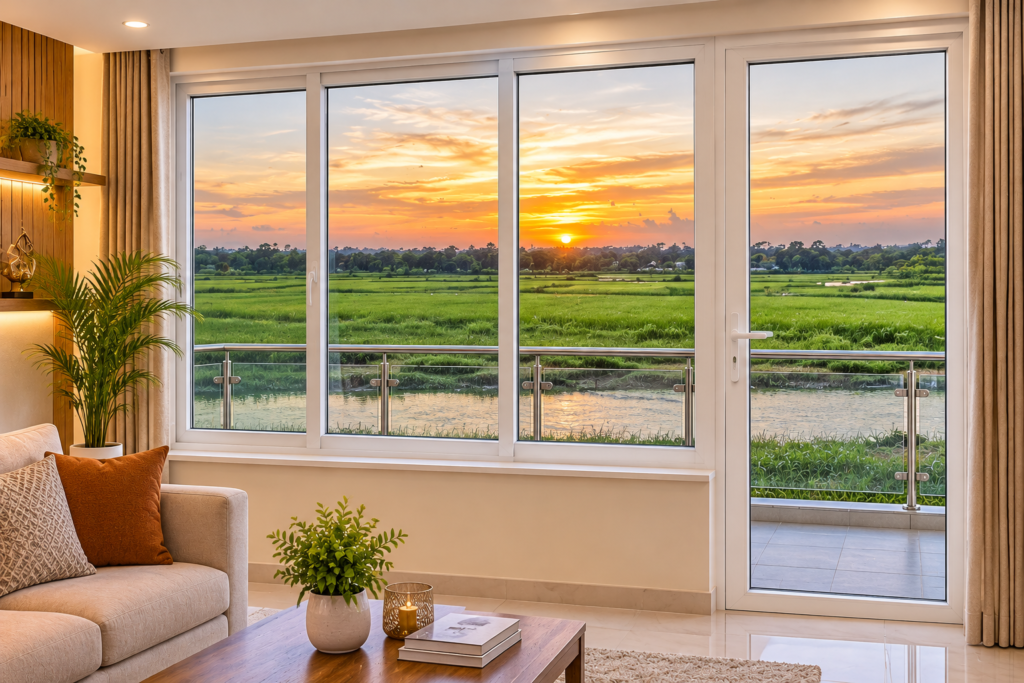
Ask anyone who has built a house in Assam what gave them the most trouble, and the answer is usually the weather. The rains arrive in June and don’t really let up for months. Even after they stop, the air stays heavy and damp. Add the hot, sticky stretches, the odd cold snap in winter and the occasional storm that rattles everything on the property, and you can see why doors and windows get such a rough ride here.
A good set has to do a lot at once. It should keep the rain out, let air and daylight in, lock properly at night and still look decent ten years from now. That’s a tall order for old-fashioned materials, and it’s the main reason uPVC doors and windows have caught on with so many families across the state. They shrug off moisture, hold in cool or warm air better than most frames, and don’t demand constant attention.
Before you go shopping, though, a word of warning. Choosing well isn’t about picking the prettiest design in a brochure. The climate, the style of your house, the way each window opens, the glass, the hardware and the fitting all play a part. Below, I’ve gone through each of these in the order most people run into them.
Begin With the Climate
Assam sits in a humid subtropical zone. The monsoon is heavy, and humidity stays high through much of the year, so a frame that can’t handle dampness will give you grief sooner or later.
Wood is lovely, but it needs polishing and repainting if you want it to last in this kind of air, and it can swell or rot when it doesn’t get that care. Iron and steel rust the moment their coating wears thin. uPVC, which is short for unplasticised polyvinyl chloride, doesn’t soak up water the way raw timber does, and there’s nothing in it to rust.
So when you’re comparing options, think about how well the frame copes with constant damp, whether it keeps performing after days of continuous rain, whether the profile and glass can take the edge off the heat, whether the seals are snug enough to stop drafts and seepage, and whether the whole thing will hold its shape for years with ordinary care. If a product can’t tick those boxes, no amount of good styling will rescue it.
Pick uPVC Windows for Rainy Climate Conditions
Of everything in the house, windows suffer most from the rain. A window that’s badly made will let water in through joints, corners and drain points you’d never think to check, and then you’re looking at stained walls, lifted flooring and damp furniture. That’s why uPVC windows for rainy climate conditions should be near the top of your list.
Decent uPVC systems usually come with several layers of sealing, gaskets built for the weather and small channels inside the frame that carry water back outside. None of this works well without proper installation, but together they make a real difference.
When you’re looking at a window, check the drainage. Ask where the water goes once it gets into the track, and don’t be shy about asking the seller to show you. Feel the rubber gaskets: they should be firm yet flexible, not brittle. Look at the profile, since a multi-chamber frame is stronger and also keeps heat and noise down a bit. Try the lock, because a good one pulls the sash tight against the frame all the way round. And pay attention to how the gap between the frame and the wall will be sealed. A top-quality window can still leak if that part is rushed.
If your house takes the monsoon head-on, weigh these things above. A handsome window that drips is no bargain.
Choose the Right Window Style
How a window opens changes how a room feels, so it’s worth thinking through before you order.
Casement windows are hinged at the side and swing open. They’re simple to use and let in a lot of air if you put them in the right place, which is why you see them so often in bedrooms and living rooms. The tight perimeter seal also helps in wet weather.
Sliding windows move sideways along a track. They’re a clever answer when an outward-opening sash would bang into a balcony rail or block a walkway. In Assam’s rain, make sure the track drains well, the seals sit properly and the rollers glide without sticking.
Tilt-and-turn windows can tip inward from the top for a bit of gentle airflow, or swing fully open when you want to clean them or climb through. People who like flexibility tend to enjoy these.
Fixed windows don’t open at all. They simply let the light in. They’re good beside a staircase or in a decorative wall opening, especially if another window in the room already handles ventilation. A fixed pane next to an opening one often looks better than two identical ones.
Match uPVC Doors to the Way You Live
You’ll use your doors more than any other part of the house, which means they have to be easy to operate, safe, weatherproof and good-looking, all at the same time. Modern uPVC doors are made for front entrances, balconies, kitchens, utility rooms and patios, so there’s plenty of choice.
Sliding doors are a favourite for balconies and patios. They don’t need room to swing, and the big glass panels flood a room with daylight. Here in Assam it pays to insist on strong rollers, a reliable lock, good drainage and solid weather seals.
Casement doors are hinged and open inward or outward. They work well on terraces, balconies and some main entrances, and they seal nicely when the frame, hinges and locks are chosen with care.
French doors have large glass panels and open from the middle or from one side. If you want your living room to flow into the garden or balcony, they’re hard to beat, and they look right in both modern and older homes.
Folding doors are a set of panels that stack to one side or both. They suit wide openings and big houses, where you want the inside and outside to blend into one space.
Look at the Profile, Not Just the Finish
The profile is the frame itself, and it affects almost everything about how a door or window behaves. Multi-chamber profiles have small hollow sections running through them, and these slow down the movement of heat. They add strength too, and they can cut some of the noise coming in from the road.
When you’re comparing, ask about thickness and whether it suits the size of the opening. Ask how many chambers there are, but don’t stop there. Find out whether steel reinforcement is used in large frames and doors, because bigger units usually need it. Run your eye over the finish and see if the material looks even. Make sure the profile has proper space for gaskets.
Chamber count isn’t everything. Plenty of buyers fixate on that one number and forget that material quality, reinforcement, fabrication and fitting matter just as much.
Get the Glass Right
Glass decides how bright, private, quiet and comfortable a room turns out. Think about where your house stands, which direction each wall faces, what’s around it and how much fresh air each room needs.
Single glazing is the basic choice. It’s fine in a few places, but it insulates less than double glazing. Double glazing uses two panes with a sealed gap between them, and when it’s specified correctly it helps with both heat and sound. Laminated glass has a layer sandwiched between the panes, so if it cracks the pieces stay put, which makes it a smart pick where security or safety matters. Toughened glass is heat-treated to take knocks and temperature swings better than ordinary glass. Frosted glass lets light through without letting people see in, so bathrooms and kitchens are its natural home.
On large openings and exposed walls, also ask about glass thickness and any safety rules that apply.
Go for Low-Maintenance Doors and Windows
Hardly anyone enjoys repainting frames every other year, and in a wet region that job comes around quicker than you’d like. This is where low-maintenance doors and windows earn their keep. uPVC doesn’t need polishing, painting or any rust treatment. A regular wipe is generally all it takes to keep it looking tidy.
Wipe the frames now and then with a soft cloth and a little mild soapy water. Clear the dust and grit out of the tracks and drain slots. Glance over the rubber gaskets for cracks or wear. Try the handles, hinges, rollers and locks every so often. Stay away from scouring pads and harsh chemicals, and keep the drainage openings free so water can get out.
That small routine is enough to keep things running smoothly for a long time.
Choose Designs That Sit Well With Assamese Architecture
Traditional houses in Assam tend to have sloping roofs, broad verandas, open layouts and lots of natural airflow. Many owners today mix those features with modern materials, and uPVC doors and windows can fit into either approach without looking out of place.
Wood-finish frames give you the warmth of timber without the upkeep. White frames look crisp and go with nearly any exterior colour. Large sliding windows are great in a living room where you’d like to enjoy the view. Frosted, tinted or patterned glass adds privacy and a bit of personality. Balcony doors in sliding or French styles make the move between inside and outside feel natural.
With a sensible choice of colour, finish and layout, you can hold on to the character of your house and still get modern comfort.
Check the Hardware and Security
Hardware is easy to overlook, yet it decides how a window feels in your hand and how safe your home is at night. A strong profile fitted with cheap accessories will let you down sooner than you expect, so have a proper look before you commit.
Multipoint locks hold the sash shut at several spots rather than just one. Stainless steel fittings are a good call in humid air because they resist corrosion. Sturdy hinges keep things aligned. Durable rollers matter a great deal on anything that slides. Strong handles feel better and stay secure, and reliable friction stays keep a window where you set it.
The hardware also has to suit the profile and be rated for the weight and size of the unit. On big openings, ask the manufacturer about load limits and which fittings they recommend.
Don’t Cut Corners on Installation
A well-made product can still fail if it’s fitted carelessly, and the risk is higher where it rains a lot. Wrong measurements, uneven frames, badly sealed joints and blocked drainage can wipe out everything the factory got right. Hire a team that has worked in your area and understands local building conditions.
A good job usually looks like this. Every opening is measured carefully before anything is made. Frames go in level and square. Sealant and weatherproofing are applied properly where the frame meets the wall. Drain openings are left clear. Hinges, rollers, handles and locks are adjusted once the unit is in. Someone runs water over it to look for leaks. Finally, each door and window is opened and closed to make sure it moves freely and locks firmly.
Good installation is what lets a product do what it was designed to do.
Find a Reliable uPVC Doors and Windows Manufacturer in Assam
Who you buy from counts as much as what you buy. A dependable uPVC doors and windows manufacturer in Assam should offer sound products, a fair range of designs, careful fabrication and installation help you can count on. APL Apollo Doors and Windows is one name homeowners often look at here, partly because of the variety of styles and the focus on durable profiles, which gives you room to match products to different rooms.
Whoever you shortlist, check a few things. See whether they make casement, sliding, fixed, tilt-and-turn and other types. Ask about profile specifications, reinforcement, glass options and the quality of the hardware. Look at the fabrication for accurate dimensions and neat finishing. Find out whether the installers understand the local weather and residential construction. Read the warranty carefully so you know what’s covered for profiles, glass, hardware and fitting. And ask about after-sales service, since adjustments and spare parts will come up sooner or later.
Request a written quotation that lists specifications, sizes, glass types, hardware, installation charges and warranty terms. Putting those details side by side tells you far more about real value than the headline price ever will.
What Do uPVC Doors and Windows Cost in Assam?
There’s no single price that applies to every house. The cost depends on how big the openings are, which profile is used, what glass goes in, how good the hardware is and how fiddly the installation turns out to be.
Larger openings use more material and may need extra reinforcement. Different profile systems vary in both material and performance. Double-glazed, laminated and specialty glass cost more than plain panes. Sliding, folding, casement and tilt-and-turn designs each need different hardware. Premium handles, locks, hinges and rollers push the total up. Awkward openings or special requirements can raise labour charges, and custom colours, wood finishes or bespoke designs add to the bill as well.
Read More: Optimizing Your Home’s Wastewater Ecosystem: Why Small Problems Become Big Ones
Get quotes from a few suppliers and compare the full specifications, not just the final figure. The cheapest offer rarely turns out to be the best value over the years. Weather protection, everyday function and proper fitting are worth paying for.
Why uPVC Makes Sense for Homes in Assam
Heavy rain, constant humidity and shifting weather make the choice of materials a big decision here, and uPVC has a few strengths that suit the conditions well.
It resists moisture. Unlike untreated wood, it doesn’t take in water easily, so swelling and rot are far less of a worry. It doesn’t corrode either, which is a real advantage in damp surroundings where iron and steel struggle. Indoors, multi-chamber profiles and good glazing cut down heat transfer, and proper sealing keeps out a fair amount of noise and drafts. You also get very little upkeep, because there’s no repainting or polishing, just an occasional clean and a quick check of the hardware. The range of colours, finishes and opening styles makes it easy to match traditional and contemporary homes. And when it’s manufactured and fitted correctly, a good uPVC system can serve reliably for many years with normal use and care.
The Best Windows for Homes in Assam
The best windows for homes in Assam depend on where the house stands, how the rooms are laid out, how much ventilation you need, how exposed you are to rain and what the architecture looks like. A house in a heavy-rainfall pocket needs extra attention to sealing and drainage. A home beside a busy road will gain from acoustic glazing and tightly sealed frames.
Here’s a rough guide to get you started:
| Home Area | Recommended uPVC Window or Door | Main Benefit |
| Living room | Sliding or casement windows | Natural light and ventilation |
| Bedroom | Casement windows | Ventilation and effective sealing |
| Kitchen | Sliding or casement windows | Convenient airflow |
| Bathroom | Frosted-glass uPVC windows | Privacy and natural light |
| Balcony | Sliding uPVC doors | Space-saving access |
| Staircase | Fixed uPVC windows | Natural lighting |
| Patio | French or folding doors | Wider indoor-outdoor connection |
Treat this as a starting point, not a rule. Your final choice should come from the actual opening sizes, the airflow you need, safety concerns and how much weather each side of the house gets.
Mistakes to Avoid When Buying
Even people who understand the benefits of uPVC slip up when it’s time to buy. These are the ones I’d watch for.
Buying on price alone is the most common. Very cheap products often hide weak profiles, poor hardware or no real installation support. Forgetting about drainage is another, and it matters most for windows facing heavy rain. Some buyers skip the glass specifications, even though glass affects safety, insulation, privacy and noise. Others choose the wrong window type, when every opening has its own space and ventilation needs and the style should match the room. Skimping on installation leads to leaks and sticky operation. Skipping the warranty small print means you won’t know what’s covered or for how long. And overlooking service is a mistake, because you’ll probably need adjustments or replacement parts later and good support is worth having.
Steer clear of these and you’ll end up with a much smarter investment.
Conclusion: Make Your Assam Home More Comfortable With the Right uPVC Doors and Windows
Good doors and windows are a big part of a comfortable, weather-ready home. In Assam, where monsoon rain and humidity shape how houses are built, the priorities are clear: moisture resistance, dependable sealing, proper drainage, suitable glass and sturdy hardware.
Read More: Smart Kitchen Design in Dubai: Integrated Appliances, Touchless Fixtures, and Layout for Daily Life
uPVC doors and windows bring together weather protection, low upkeep, flexible design and good insulation. Whether you go for sliding or casement windows, French doors or a balcony system, there’s a choice to fit your taste and daily routine.
Before you buy, take a hard look at the manufacturer’s experience, the profile specifications, glass quality, hardware, installation method and warranty. A well-chosen, professionally fitted system makes the house nicer to live in and cuts down on routine maintenance. If you’re exploring uPVC doors and Windows in Assam for a new build or a renovation, APL Apollo Doors and Windows is worth including in your comparison. Whichever way you go, investing in quality uPVC doors and windows in Assam is a smart step towards a more comfortable and practical home.
Frequently Asked Question (FAQs)
Q1. Are uPVC doors and windows suitable for Assam’s climate?
Ans. Yes, uPVC doesn’t absorb moisture or rust, so it handles heavy monsoon rain and high humidity well. Multi-chamber profiles and good sealing also keep indoor temperatures comfortable.
Q2. Which are the best windows for homes in Assam?
Ans. It depends on the room. Casement and sliding windows suit most living areas and bedrooms, fixed windows work for staircases, and frosted-glass uPVC windows are good for bathrooms. For rainy areas, choose uPVC windows with proper drainage channels and quality gaskets.
Q3. Are uPVC doors and windows really low maintenance?
Ans. Yes, They need no painting, polishing or anti-rust treatment. Wiping the frames with mild soapy water, clearing the tracks and drain slots, and checking the hardware now and then is enough.
Q4. How do I choose a reliable uPVC doors and windows manufacturer in Assam?
Ans. Check their product range, profile and hardware quality, installation experience, warranty terms and after-sales service. Also ask for a detailed written quotation, so you can compare brands like APL Apollo Doors and Windows on full specifications, not just price.
 How to Choose the Right uPVC Doors and Windows for Your Assam-Style Home
 Smart Kitchen Design in Dubai: Integrated Appliances, Touchless Fixtures, and Layout for Daily Life
 Optimizing Your Home’s Wastewater Ecosystem: Why Small Problems Become Big Ones
 Why Luxury New Construction Is Thriving in Houston